
Children and Communion: Experiencing Faith Across Generations
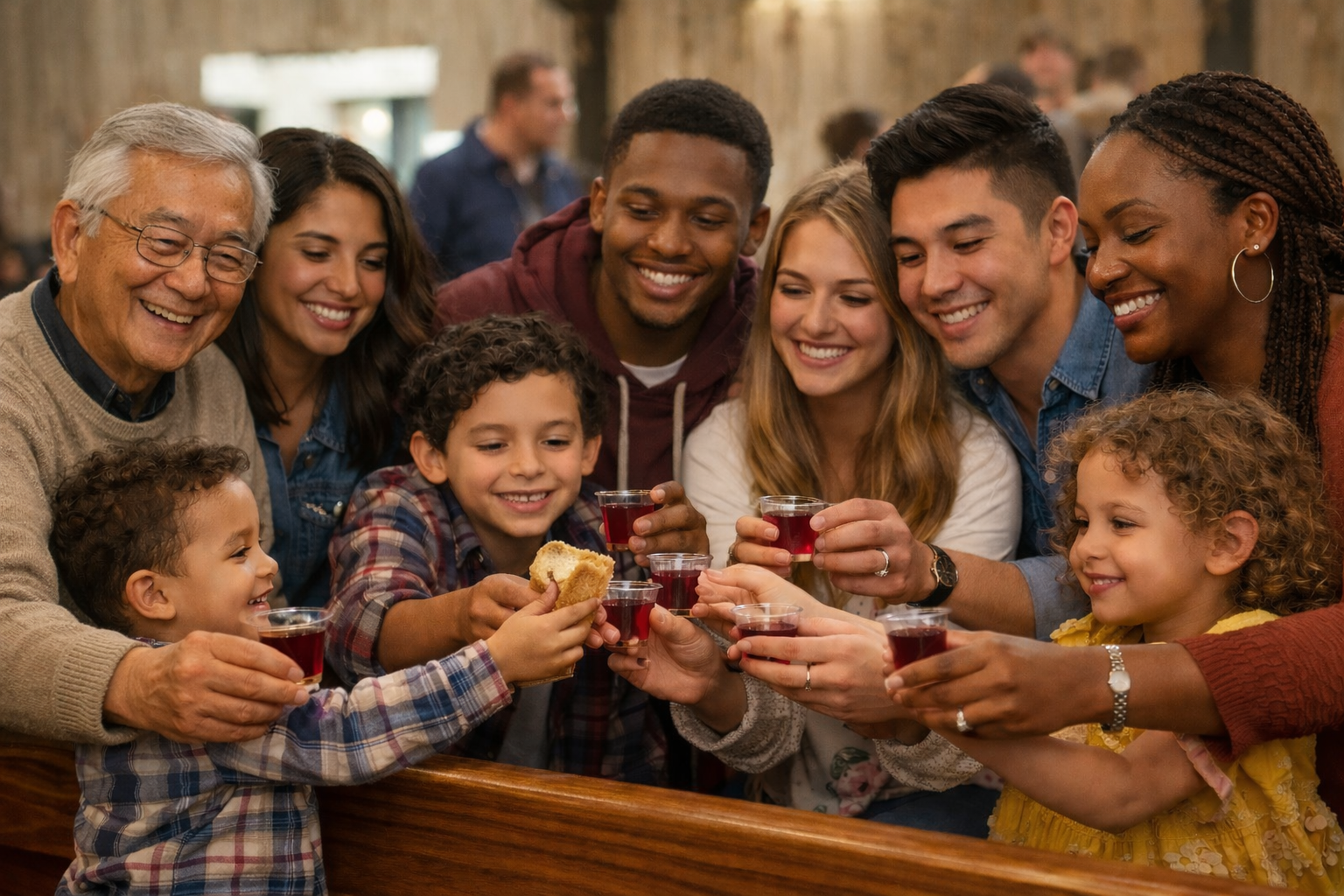
Communion is often viewed as a practice reserved for adults, yet its significance can be magnified when children are welcomed to the table. By participating alongside parents, grandparents, and other church members, children are not only learning about God—they are living out faith in a tangible way. Intergenerational communion has the power to nurture spiritual growth, cultivate a strong sense of belonging, and establish faith habits that endure throughout life. I still remember my own childhood communion—the hush in the church, the long line, the wafer that stubbornly stuck to my tongue, and yet the undeniable feeling that something holy was happening all around me.
Learning Faith by Watching
Children are keen observers, absorbing much more from what they witness than from what they are told. When adults approach communion with reverence, gratitude, and reflection, these attitudes are modelled for children. Through observation, children learn meaningful ways to engage with God. Research supports the idea that children internalise spiritual practices most effectively by watching adults demonstrate them (Csinos & Edmunds, Faith Development and Education, 2012).
Building a Sense of Community
Communion is, by its nature, a communal act. Sharing this rite across generations reinforces the notion that faith is fundamentally relational. Children experience first-hand that they belong to a wider, caring community in which every person, regardless of age, is valued.
Forming Spiritual Habits Through Ritual
Rituals like communion help children grasp spiritual truths through experience, not just words. The sensory elements—the bread, the cup, and the spoken words of remembrance—help make abstract concepts like grace, forgiveness, and gratitude accessible and real.
Opening Space for Stories and Mentorship
Intergenerational communion naturally creates moments for conversation. When children ask questions like “Why do we do this?”, it opens the door to sharing stories of God’s faithfulness. These interactions demonstrate that faith is not simply taught but lived and shared within relationships.
Encouraging Lifelong Faith
Children who participate in communion with the broader church community are more likely to develop a faith that is connected, enduring, and relational. Early exposure to shared spiritual practices helps children see worship and ritual as part of everyday life, rather than distant traditions. Studies indicate that children who experience faith in this way have a greater likelihood of remaining engaged in religious life as they mature (Gershoff et al., Handbook of Spiritual Development in Childhood and Adolescence, 2010).
Conclusion
When children join adults in communion, they encounter faith in deeply formative ways. They learn by watching, by joining the queue, by handling the bread, and by absorbing the quiet atmosphere—moments that may seem minor but can leave lasting impressions. Intergenerational communion allows children to discover that faith is not just something taught; it is something lived, shared, and experienced together.
Jo Foster
Kerith Kids Champion